
The broader Nifty, after touching a high (intra-day) of 10,555.50 points, finished at 10,539.75, up 84.80 points, or 0.81 per cent.

Sounding bullish on the stock markets, it pegged the Sensex target at 23,000 by December.
BSE-FMCG, consumer durables, pharmaceuticals led declines.

ONGC was the top gainer in the Sensex pack, rallying over 13 per cent, followed by HCL Tech, Hero MotoCorp, NTPC, TCS, M&M, Infosys and Maruti. NSE Nifty soared 306.55 points, or 3.21 per cent, to 9,859.90.

The automobile sector has started seeing volume growth, the crucial economy segment included. Maruti Suzuki India (MSIL) could be a big beneficiary as the country's largest passenger vehicle (PV) maker has seen several favourable developments including volume recovery. Demand for its new sports utility vehicles (SUVs) appears to be good, and the company has 4 lakh outstanding orders by April 2023, (up from 3.6 lakhs in January 2023). Siam (Society of Indian Automobile Manufacturers) estimates that passenger vehicle demand would grow by 5-7 per cent in the 2023-24 financial year (FY24) and MSIL is likely to beat the market growth.
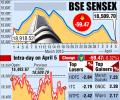
The 30-share Sensex dropped 68.16 points at 18,664.88 and the 50-share Nifty fell 23.15 points at 5,519.10 levels.

State Bank of India was the biggest loser in the Sensex pack, shedding 1.69 per cent, followed by Asian Paints, Kotak Mahindra Bank, HCL Technologies, Reliance Industries, Wipro, IndusInd Bank, Infosys, Power Grid and HDFC twins. In contrast, Nestle, Maruti, Bharti Airtel, Tata Motors, ITC and Hindustan Unilever were among the gainers.
The news that exports to the US will not restart before next year as well as the September quarter performance are sentiment dampeners.

Realty, pharma and FMCG shares buck trend.

Equity benchmark Sensex tumbled 674 points on Friday, weighed by losses in banking stocks as an unabated spike in new coronavirus cases fuelled uncertainty over the economic impact of the pandemic. After hitting a low of 27,500.79 during the day, the 30-share BSE barometer ended 674.36 points or 2.39 per cent lower at 27,590.95. The NSE Nifty shed 170 points, or 2.06 per cent, to finish at 8,083.80.

With an epic battle of billionaires for supremacy in one of the world's most prolific markets and a pandemic-propelled surge in online shopping in the background, India's nearly trillion-dollar retail market is hoping to touch 85 per cent of the pre-COVID business in the first half of the New Year. In a year when the COVID-19 carnage ripped apart the retail business, circa 2020 will best go down for the unravelling of the war between Jeff Bezos, the world's wealthiest man, and richest Indian Mukesh Ambani for pre-eminence in the booming market that is estimated to reach $1.3 trillion by 2025. It all started with Ambani's Reliance Industries agreeing in August to buy assets of the nation's second-largest retailer for Rs 24,713 crore, just a year after Bezos' Amazon purchased an indirect stake in the indebted Future Retail.
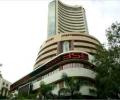
With the impending corporate earnings season, the markets were upbeat, with analysts expecting the Q4FY11 results to outperform the previous quarter.

The July-September quarter results of software companies in the engineering research and development (ER&D) segment were broadly in line with expectations, though there have been cuts in revenue growth guidance. While results were a mixed bag, and there are cautionary views on the near-term outlook, brokerages and global consulting firms highlight the strong growth trajectory for the sector. They expect this segment of the software sector to grow by 8-12 per cent going forward.
History shows that the large caps stage a fast recovery, whereas penny stocks continue to languish in the aftermath of a market crash. For instance, 884 penny stocks (those trading below their paid-up value and comprising 31.5 per cent of all traded stocks) have not yet seen their highs of May 10, 2006.

After selling brands like Pulsar, Boxer, Platina and RE in over 70 countries, Bajaj Auto plans to enter Thailand this year followed by Brazil next year.

The rupee had tumbled by 33 paise to close at 54.47 against the US currency in the previous session on Friday, due to a firm dollar overseas.

Investor wealth plummeted by nearly Rs 5 lakh crore in early trade on Monday as equity markets crashed tracking global equity selloff amid rising uncertainty over the economic impact of coronavirus outbreak. Market capitalisation (m-cap) of BSE-listed companies saw a massive decline after the 30-share index plunged 1515.01 points, or 4.03 per cent, to 36,061.61. The NSE Nifty too cracked 417.05 points, or 3.80 per cent, to 10,572.40.

Benchmark indices advanced for the second straight session on Tuesday, with the Sensex and Nifty jumping nearly 2 per cent each, mirroring a rally in global equity markets. Buying in index majors Reliance Industries and IT stocks buoyed the benchmarks. The BSE Sensex zoomed 934.23 points or 1.81 per cent to settle at 52,532.07. During the day, it rallied 1,201.56 points or 2.32 per cent to 52,799.40. The NSE Nifty climbed 288.65 points or 1.88 per cent to finish at 15,638.80.

Irregular rainfall and a pick-up in commodity costs are expected to weigh on the demand and margins of fast-moving consumer goods (FMCG) companies. Most companies reported a sharp expansion in gross margins in the April-June quarter (first quarter, or Q1) of 2023-24 (FY24), given the lower prices of key raw materials and earlier price hikes. Furthermore, there were expectations that cost savings being passed on could reflect in volume growth going forward. However, these hopes could be dashed if demand recovery, especially in the rural segment, stalls, and gains on the raw material front start to recede.

Bajaj Finance was the top gainer in the Sensex pack, soaring over 8 per cent, followed by Kotak Bank, IndusInd Bank, HDFC, PowerGrid, Axis Bank, ICICI Bank and L&T. On the other hand, Maruti, ITC, NTPC and Nestle India were among the laggards.
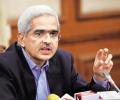
Softening inflation, Das said would make available more policy space to the central bank to address risks to the growth going forward.
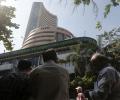
The BSE Midcap and the S&P BSE Smallcap indices outperformed to gain 0.6% and 1.1%, respectively

The Indian lenders are worried over the fast depleting asset base of the Future group companies which would make their recovery of dues difficult. The asset base of Future group has eroded in the last two years due to lockdown and takeover of 947 stores by rival Reliance Retail after Future group's lease on the properties expired. Bankers said they have approached bankruptcy court so as to avoid any duplication of legal action and reduce time at the legal forums.

The stock of two wheeler maker Eicher Motors was the highest gainer among BSE 100 stocks, rising 6.6 per cent in trade on Friday. The gains came on the back of better than expected performance in the March quarter of the 2022-23 financial year (Q4FY23) and earnings upgrades by brokerages. Standalone revenues (Royal Enfield) were up 19.9 per cent year-on-year (YoY), led by an 18 per cent growth in volumes and a marginal uptick in realisations.

The National Company Law Tribunal's (NCLT's) declaration that Zee Entertainment is bankrupt adds a new measure of uncertainty to the proposed merger with Sony. Three entities -- Aditya Birla Finance, IndusInd Bank and YES Bank -- have filed appeals in the NCLT for recoveries of Rs 130 crore, Rs 90 crore and Rs 540 crore, respectively. The money was borrowed by a related party - Siti cable - and not returned. Zee was a corporate guarantor.

The NSE Nifty shed 62 points from a high of 5,416, before signing off with a loss of 18 points at 5,368. The market breadth too turned negative at close. Out of 3,029 stocks traded, 1,631 declined and 1,280 advanced on the BSE.

India's largest two-wheeler maker by volume - Hero MotoCorp (Hero) - posted a better-than-expected operating performance in the January-March (fourth quarter, or Q4) quarter of 2022-23 (FY23). Riding on higher average selling prices which were up 5 per cent year-on-year (YoY) and volume growth of 7 per cent, the company registered a 12 per cent growth in revenue to Rs 8,306 crore. The company sold 127,000 units in the quarter, largely driven by domestic sales which were up 11.6 per cent, while exports saw a sharp fall of 57 per cent over the year-ago quarter.

Several brokerage houses have given a year-end target of as high as 30,000 for the BSE bourse's benchmark Sensex, with fund managers telling investors not to redeem though the index is still only around 25,000.

Equity indices failed to hold on to their gains in see-saw trade on Tuesday, ending in the red for the third straight session despite a tentative recovery in global equities. The rupee too bounced back from historic lows, but the overall sentiment remained risk-averse amid concerns over economic recovery in a high interest rate scenario. The 30-share BSE Sensex had a choppy start but gained momentum in mid-session trade. However, it succumbed to selling pressure towards the fag end to close 105.82 points or 0.19 per cent lower at 54,364.85. On similar lines, the broader NSE Nifty declined 61.80 points or 0.38 per cent to finish at 16,240.05.

Though most analysts expect the global central banks to keep the liquidity tap open, valuations of Indian markets, they say, are beginning to look stretched. Against this backdrop, they remain cautious, with some even expecting a minor correction from here on.

On the Sensex chart, Bajaj Auto, HDFC, Infosys, Tech Mahindra and ICICI bank emerged as the prominent gainers. NSE Nifty ended with a gain of 106.95 points at 14,724.80.

Forex dealers said besides dollar's gains against other currencies overseas, increased demand from oil importers for the US currency put pressure on the rupee.

'Over the next two quarters, markets will be guided by observing the earnings resilience of corporates during the second lockdown, progress of the monsoon and the damage, if any, to rural spending power due to the second wave.'

Sun Pharma was the biggest loser among Sensex components, plunging 3.94 per cent, followed by Tata Steel falling 3.12 per cent.
Cheap valuations mean little in a bear market. There could be more downside.

Corporate margins and profits in India remain vulnerable to changes in crude oil prices in the international market. Historical quarterly data from listed companies (excluding banks, finance and insurance, oil and gas, and power sectors) indicate an adverse correlation between corporate margins and crude oil prices.

A combination of fewer listings and falling 'average daily traded value' contributed to the drag in Q3.

Analysts attribute this volatility to selling by FPIs and FIIs.

With the prevailing uncertainty in equity markets and an indefinite postponement of hopes of any recovery, retail investors accessing stock markets through equity mutual fund schemes are wriggling out fast.
 © 2026 Rediff.com - Advertise with us - Disclaimer - Privacy Policy - Sitemap - Feedback - About us - Terms of use - Grievances